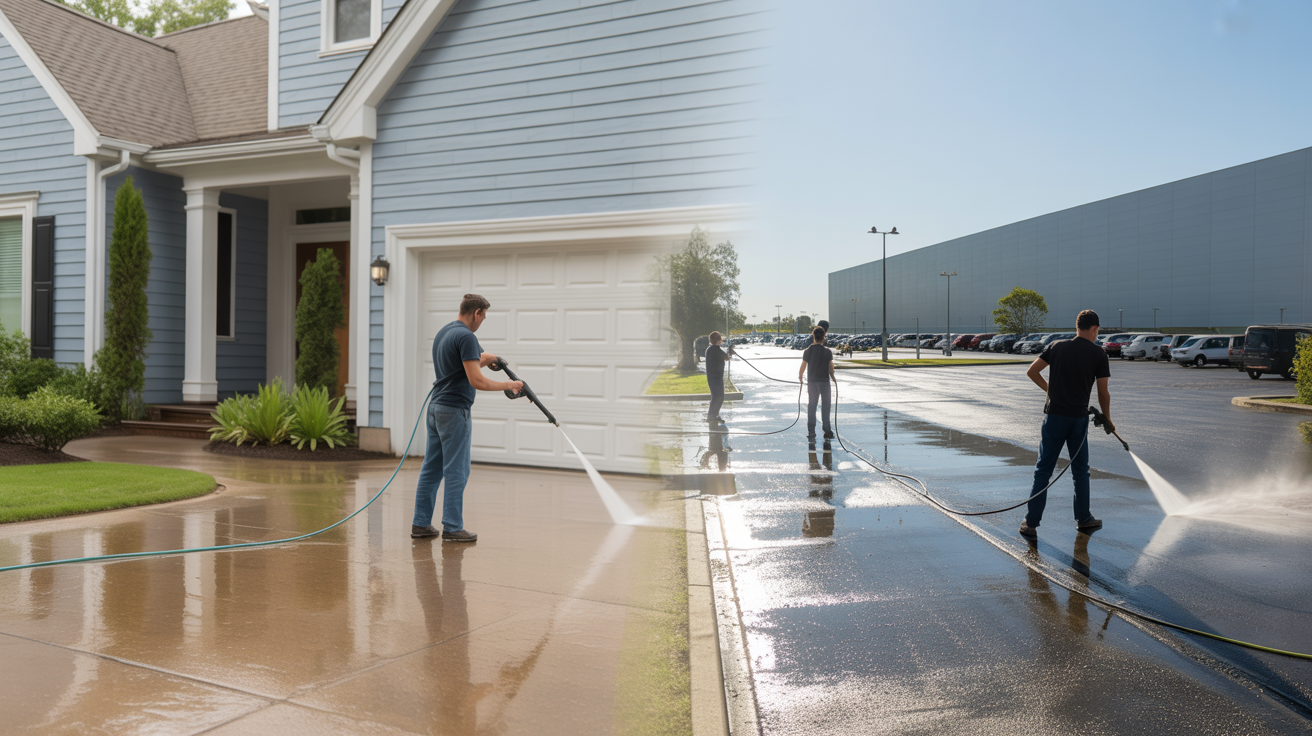
One of the biggest decisions a pressure washing business owner faces is whether to focus on residential work, chase commercial contracts, or do both. Each path has different revenue potential, startup requirements, and growth trajectories. Let's break it all down so you can make the right choice for your business.
Residential Pressure Washing: The Full Picture
Revenue Potential
Residential pressure washing is where most contractors start, and for good reason. The barrier to entry is low, the customer base is massive, and you can start generating revenue quickly.
- Average job value: $200–$500
- Jobs per day (solo): 2–4
- Daily revenue potential: $600–$1,500
- Annual revenue (solo, full season): $80,000–$180,000
- Profit margins: 50–65%
Startup Costs
Getting into residential pressure washing is relatively affordable compared to commercial operations.
- Pressure washer (3,000–4,000 PSI): $800–$3,000
- Surface cleaner: $150–$400
- Hoses, nozzles, fittings: $200–$500
- Chemical setup (soft wash): $300–$800
- Trailer or truck setup: $500–$2,000
- Insurance: $500–$1,500/year
- Total minimum investment: $2,500–$8,000
Advantages of Residential Work
- Lower barrier to entry — start with basic equipment
- Abundant customer base in any area
- Cash or quick-pay customers (no net-30 invoicing)
- Easier to build reviews and referrals
- Less complex bidding process
- Flexible scheduling
Challenges of Residential Work
- Highly seasonal in many markets
- Lower individual job values mean you need more customers
- Price-sensitive customers who shop around
- More time spent driving between small jobs
- Harder to scale beyond a certain revenue ceiling without employees
Commercial Pressure Washing: The Full Picture
Revenue Potential
Commercial work offers significantly higher revenue per job and the holy grail of service businesses: recurring contracts.
- Average job value: $500–$5,000+
- Jobs per day: 1–2 (jobs take longer)
- Contract values: $1,000–$10,000+ per month
- Annual revenue potential: $150,000–$500,000+ (with contracts)
- Profit margins: 35–55%
Startup Costs
Commercial pressure washing requires a larger upfront investment in equipment and credentials.
- Hot water pressure washer: $3,000–$10,000
- Large surface cleaners (28”+): $500–$1,500
- Water recovery system: $2,000–$8,000
- Dedicated truck or trailer rig: $5,000–$25,000
- Commercial insurance: $2,000–$5,000/year
- Certifications and licensing: $200–$1,000
- Total minimum investment: $12,000–$50,000+
Advantages of Commercial Work
- Recurring monthly/quarterly contracts provide predictable revenue
- Higher revenue per job
- Less seasonal — commercial properties need year-round maintenance
- Fewer customers needed to hit revenue goals
- Professional reputation builds faster with commercial clients
- Night and weekend work available (restaurants, stores after hours)
Challenges of Commercial Work
- Higher startup costs for equipment and insurance
- Net-30 or net-60 payment terms tie up cash flow
- More complex bidding and proposal process
- Environmental regulations (water reclamation, chemical restrictions)
- Some contracts require certifications or specific insurance levels
- Competition from established commercial cleaning companies
The Hybrid Approach: Best of Both Worlds
Many of the most successful pressure washing businesses don't choose one or the other — they strategically combine both. Here's a proven growth path:
Year 1: Build your foundation with residential work. Focus on generating reviews, building a customer list, and perfecting your operations. Use a CRM to track every lead and automate follow-ups.
Year 2: Start pursuing smaller commercial accounts — restaurants, small retail, HOAs. These bridge the gap between residential and large commercial work.
Year 3+: Use your commercial references and experience to bid on larger contracts. Maintain residential work as a supplemental revenue stream and training ground for new employees.
How CRM Tools Help Both Residential and Commercial
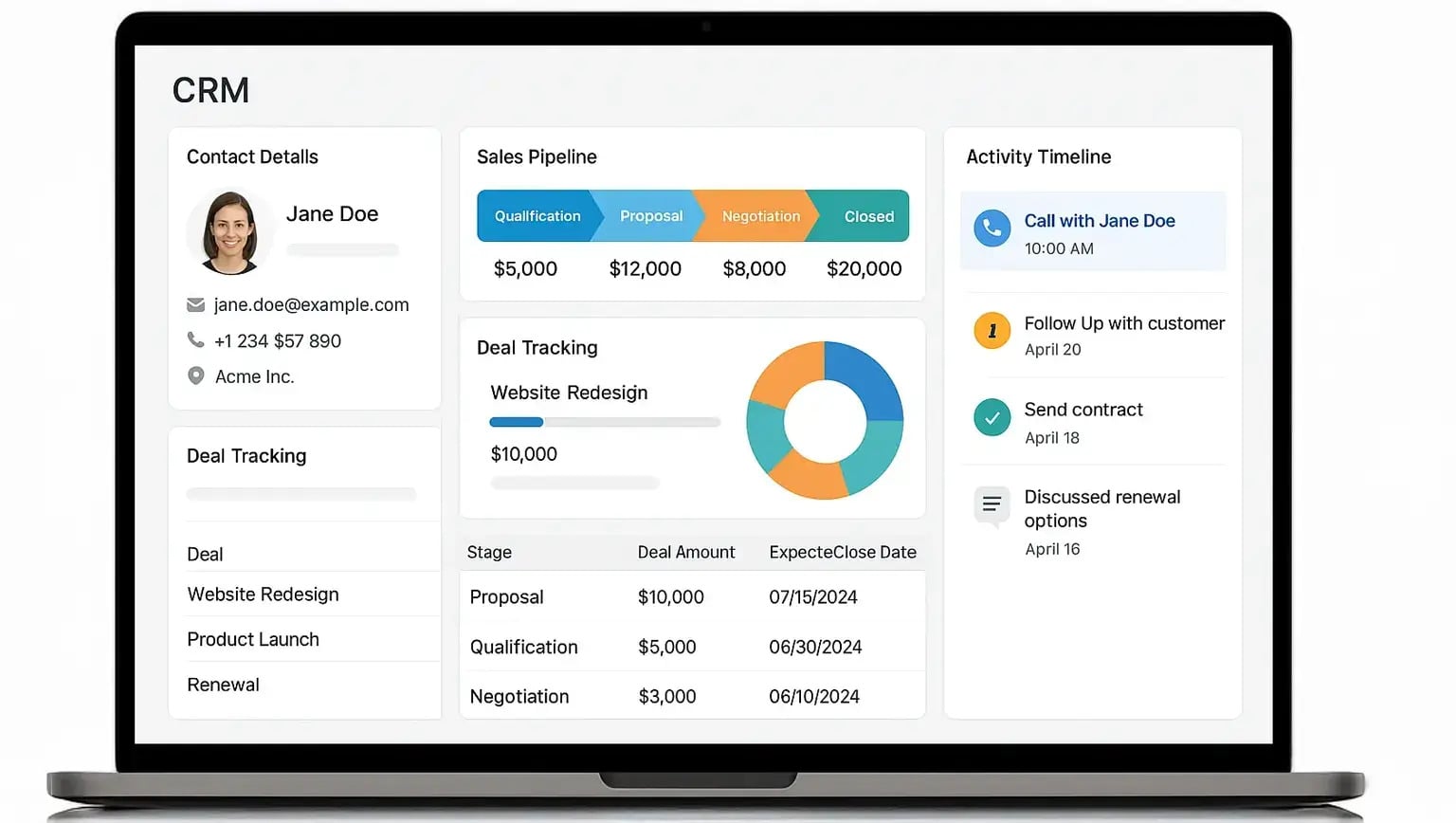
Whether you focus on residential, commercial, or both, a CRM is essential for different reasons in each niche.
For residential work, you need speed. The first contractor to send a professional quote typically wins the job. QuoteIQ's MapMeasure Pro lets you measure a residential property and send a quote in minutes without visiting the property.
For commercial work, you need organization. Tracking contract renewals, managing recurring schedules, and maintaining detailed service records are critical. A CRM that handles invoicing, scheduling, and customer communication keeps your commercial operations running smoothly.
For the hybrid approach, you need a system that scales. Starting with residential and growing into commercial means your tools need to grow with you without requiring a complete system overhaul.
Making Your Decision
Here's the bottom line: if you're just starting out, begin with residential. The lower startup costs, abundant customer base, and simpler operations let you learn the business without a massive financial risk.
If you're already running a successful residential operation and want to break through the revenue ceiling, commercial contracts are the path to scaling beyond $200K per year.
And if you want the most resilient business possible, pursue both — using residential for consistent cash flow and commercial for growth and stability.
Scale Your Business with the Right Tools
Whether you're washing driveways or parking lots, QuoteIQ helps you quote faster, schedule smarter, and manage customers effortlessly. Start your free 14-day trial.
Try QuoteIQ Free for 14 DaysReady to explore CRM options? Check out our comparison of the top 5 CRMs or learn how to price your services profitably for either niche.
Affiliate Disclosure: PressureWashIQ may earn a commission if you sign up through our links, at no extra cost to you. We only recommend tools we believe genuinely help pressure washing businesses.